Gadgets
The Console That Remembers Everything You Grew Up Playing

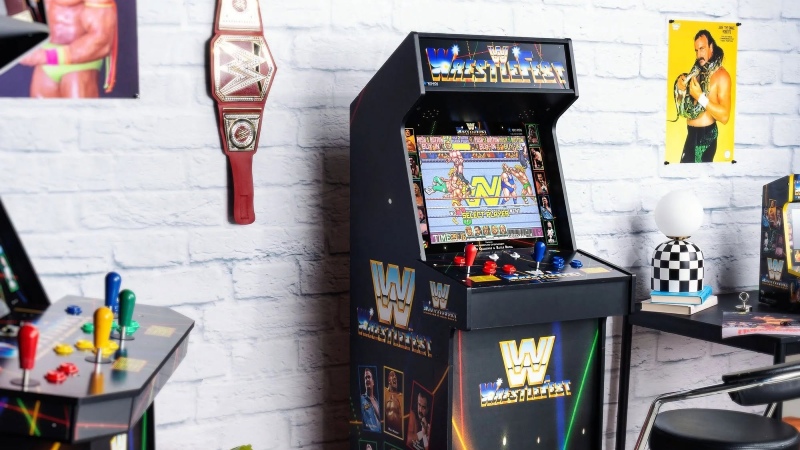
Every dad has a memory like this one. You’re eight or nine, it’s a Saturday, and you’ve just spent twenty minutes positioning and hooking everything up, including rewinding the tape so your Commodore 64 will load a game before your mum needs the TV back. Or you’re standing in a milk bar with a pocketful of coins, watching some kid three years older than you clear the second loop on the arcade cabinet you’ve been feeding for a week straight. That stuff doesn’t leave you. It just goes quiet for a few decades while you’re busy with mortgages and school pickups.
Then you pick up a retro handheld console for the first time, and it all switches back on.
Remember When Gaming Took Up Half the Lounge Room?
Think about what it took to play a game in 1985. The Commodore 64 alone was a keyboard-shaped brick that needed a television, a set of RF leads, and either a datasette or a 1541 disk drive sitting next to it, clicking away like a little robot having a moment. The Amiga 500 wasn’t much kinder to your lounge room – a beige slab with its own monitor cable, its own floppy drive, its own tangle of power bricks. Getting from “off” to “playing” was a fifteen-minute production. Half the fun was the ritual. The other half was hoping the disc hadn’t been scratched.
None of that was small. The C64 sold something like 12.5 million units and is still recognised by Guinness World Records as the best-selling desktop computer of all time, and the Amiga 500 wasn’t far behind as the machine that taught a generation what “multitasking” and colour graphics on a home budget actually meant. These weren’t toys. They were proper computers that ate a chunk of the lounge room and a fair slice of your patience.
Now hold a retro handheld next to that memory. It’s smaller than the calculator you weren’t allowed to use in maths exams, it turns on in about two seconds, and somewhere in its little library sits every C64 and Amiga classic you used to wait a full minute to load, plus everything that came after.
The Handheld That Swallowed Your Childhood Whole
Here’s the bit that still catches blokes off guard: it’s not just the C64 and Amiga stuff. One handheld runs the NES, the Sega Master System and Mega Drive, the SNES, the Game Boy, a dozen arcade cabinets’ worth of classics – and tops out at PlayStation 1, the console that shipped over 100 million units worldwide and turned Gran Turismo, Crash Bandicoot, Tomb Raider and Metal Gear Solid into household names. That whole disc-swapping, memory-card-juggling era, the one that felt like the future when it landed in lounge rooms in 1995, now sits on the same device as everything that came before it.
You’re not choosing between the C64 games, the arcade cabinet you fed coins into, the Sega your mate had instead of a Nintendo, and the PS1 you saved up for. A single retro handheld carries all of it at once. Every console you ever owned, wanted, or argued about in a schoolyard, stacked into one screen small enough to sit next to your keys.
Why a Ten-Minute Session Is Actually Good for You
There’s a reason this stuff feels so good, and it’s not just sentimentality talking. Nostalgia has a calming effect, with studies actually highlighting it as a mood booster and a stress reliever, because it reconnects you with a version of yourself from before the current to-do list existed. A quick session on a retro handheld does the same job as a walk around the block or five minutes with a decent coffee. It’s a reset button, not a rabbit hole.
And because these things are handheld, the session fits into a dad’s day instead of demanding a dedicated gaming night. Ten minutes of an old arcade shooter while the kettle boils. A few laps of a PS1 racer while you’re waiting for the kids to finish swimming lessons. A level or two on the train before work starts eating your brain again. You’re not carving out a Saturday afternoon as you did as a kid – you’re stealing back small, guilt-free pockets of the feeling that made you love games in the first place.
It’s also an easy way to hand that feeling to your own kids without a lecture. Sit a ten-year-old down with an arcade classic and watch them get exactly as hooked as you did, minus the tape deck.
Affordable, Straightforward, and Built for Men Who Don’t Need Another Project
The other thing worth saying: this isn’t an expensive habit. You’re not chasing down a working C64, sourcing a CRT, and praying the floppy drive still reads discs. A single, well-chosen handheld console covers everything from the C64 and Amiga through the NES, Sega and arcade cabinets up to the PS1, in one purchase, at a price that undercuts what most people spend replacing a single retro machine’s dodgy power supply.
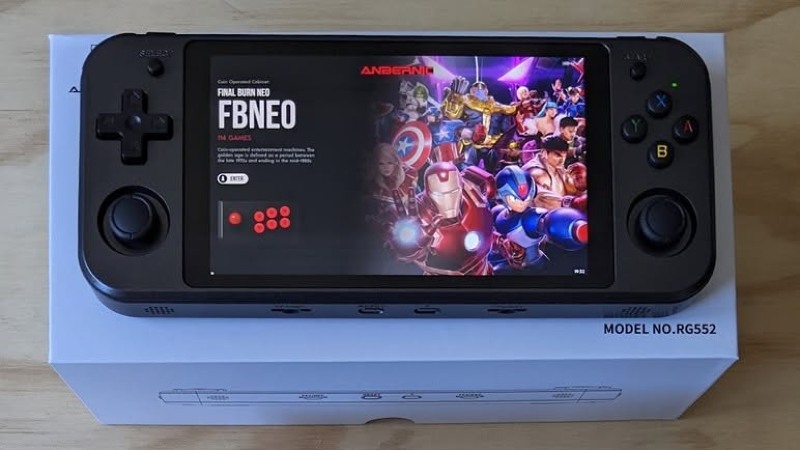
Nobody wants a hobby that turns into a restoration project. A good retro handheld console arrives charged, ready to go, and it doesn’t care whether you’re in the middle of a city or somewhere with dial-up-grade internet three hours from the nearest one; it works the same everywhere. If you’re after a handheld emulator that just works out of the box, that’s the whole appeal: no soldering, no forums, no gamble on a second-hand listing. Just the games you remember, running properly, on something that cost less than a decent dinner out.
Where It Actually Lands
None of this is about chasing the past; it’s about carrying a slice of it around for the days that need it. The C64 and the Amiga taught a generation of dads what a “computer” was even for. The NES and the Sega taught you which console war you were on. The arcade cabinet taught you patience, and occasionally taught you to lose gracefully to a stranger. The PS1 taught you that games could make you feel something. A retro handheld doesn’t replace any of that. It just makes it portable enough to visit on a Tuesday.
It’s also turning into something bigger than one man’s midlife nostalgia trip. Electro Arcade, a retro gaming retailer, noticed dads and kids picking up the same handheld and getting hooked for completely different reasons (one chasing a memory, the other discovering it as a newcomer) with age barely a factor either way. That’s the strange gift retro gaming keeps giving: it doesn’t check ID at the door. An eight-year-old and their dad, or their grandad, can sit on the same couch, trade the same handheld back and forth, and both walk away happy, for reasons that have nothing to do with each other. Not many hobbies pull that off, and fewer still fit in a pocket while they’re doing it.
Long live retro gaming!