Business
Why Precision Laser Engraving Is Becoming a Must-Have for Modern Manufacturing
The world of product manufacturing is moving further and further into customisation, making laser engraving a vital asset.

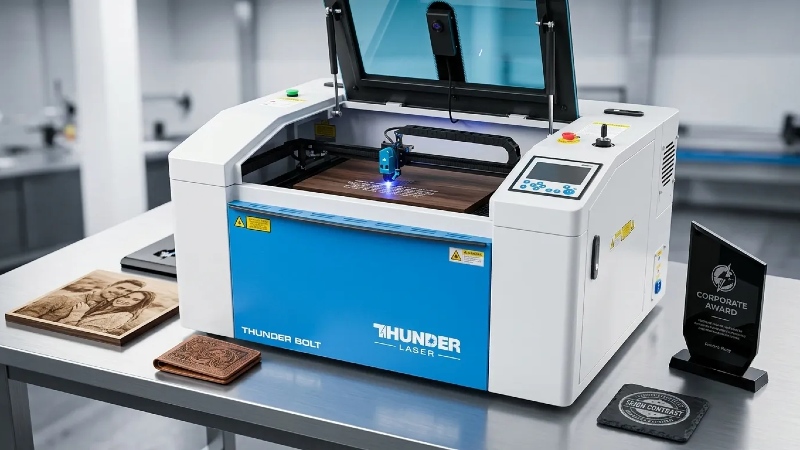
Walk through almost any factory today, and you’ll find products that need to be identified, tracked, branded, or customised. A simple serial number. A company logo. A QR code that links to production records. It all sounds straightforward until you need those markings to stay visible for years.
That’s one reason laser engravers have become such an important part of modern manufacturing. Across industries like engineering, automotive production, signage, and metal fabrication, businesses use laser engraving technology to create permanent marks that remain clear and readable throughout a product’s lifespan.
Unlike labels that peel off or ink that fades over time, laser engraving creates a permanent mark directly on the material itself. The result is clean, professional, and built to last. For many businesses, it’s no longer just a nice extra. It’s part of everyday production.
Why Traditional Marking Methods Fall Short
Many manufacturers still use stickers, printed labels, or ink-based marking systems. They work well enough in some situations, but they also create problems.
Labels can be damaged during transport. Ink can wear away when exposed to heat, chemicals, or regular handling. Mechanical engraving tools eventually wear down and require replacement.
Laser engraving avoids many of these issues because there is no physical contact between the machine and the material being marked. The laser beam does the work with incredible accuracy, creating sharp, permanent markings again and again.
For businesses producing thousands of products each month, consistency matters. Customers expect every item to meet the same standard, whether it’s the first product off the line or the ten-thousandth.
Where Laser Engraving Is Used
Most people associate laser engraving with personalised gifts, but the technology is far more versatile than that.
Manufacturers use laser engraving for:
- Serial numbers
- Product identification
- Asset tracking
- Compliance markings
- QR codes
- Barcodes
- Company branding
- Safety information
- Control panel labels
It’s used across industries that demand precision and reliability.
An engineering company may engrave part numbers onto components. An automotive supplier might mark every part for traceability. A signage manufacturer can produce crisp lettering that remains clear for years. Even promotional product companies rely on laser engraving to personalise items with names, logos, and custom messages.
Different industries have different requirements, but the goal is usually the same: create a permanent mark that looks professional and remains readable.
The Materials You Can Work With
One of the biggest advantages of laser engraving is flexibility.
Modern machines can process a wide range of materials, including:
- Stainless steel
- Aluminium
- Brass
- Copper
- Mild steel
- Acrylic
- Wood
- Leather
- Plastic
- Glass
That means a single system can often support multiple departments or product lines.
For a growing business, this flexibility can make a significant difference. Instead of investing in separate marking solutions for different materials, many companies can achieve their requirements with one laser-based platform.
Why Precision Matters More Than Ever
Manufacturing has changed. Customers expect higher quality. Regulations require improved traceability. Production lines are becoming more automated and data-driven. So, the small details suddenly matter a lot.
If a barcode scans incorrectly or a serial number becomes unreadable, the consequences can be expensive. Products become harder to track, service records become less reliable, and quality control teams lose valuable information.
Laser engraving helps solve these challenges because it produces extremely accurate results. Fine text, detailed graphics, and machine-readable codes can all be engraved with a level of precision that is difficult to match using older methods.
That accuracy becomes particularly valuable in sectors such as engineering, electronics, automotive manufacturing, and industrial production.
Choosing the Right Laser Engraving Solution
Not every business needs the same machine.
A company producing promotional products will have different requirements from a manufacturer marking heavy industrial components. Production volume, material types, marking speed, and automation requirements all play a role in selecting the right solution.
- Before investing, businesses should consider:
- The materials they work with most often
- Daily production requirements
- Desired engraving speed
- Marking depth requirements
- Software compatibility
- Future growth plans
Making the right choice upfront can improve productivity for years and reduce unnecessary operating costs down the line.
Businesses looking to explore professional laser engravers can review available technologies and machine specifications at MaxLaser’s range of laser engravers.
Looking Ahead
The demand for permanent marking and product traceability isn’t slowing down, because manufacturers are producing more customised products than ever before, customers want higher quality, businesses need better tracking systems, and regulations continue to evolve. Therefore, laser engraving sits right at the centre of these trends.
It’s fast, precise, reliable, and adaptable across a huge range of applications. Whether the goal is branding, identification, compliance, or customisation, laser engraving provides a practical solution that fits the way modern manufacturing works.
That’s why more companies are moving away from traditional marking methods and making laser technology a core part of their production process. It’s not just about creating a mark. It’s about creating information that lasts as long as the product itself.