Game reviews
Saros Review — Proceed with Caution
Saros can be your best friend or worst enemy, depending on your tastes. Here’s our review.

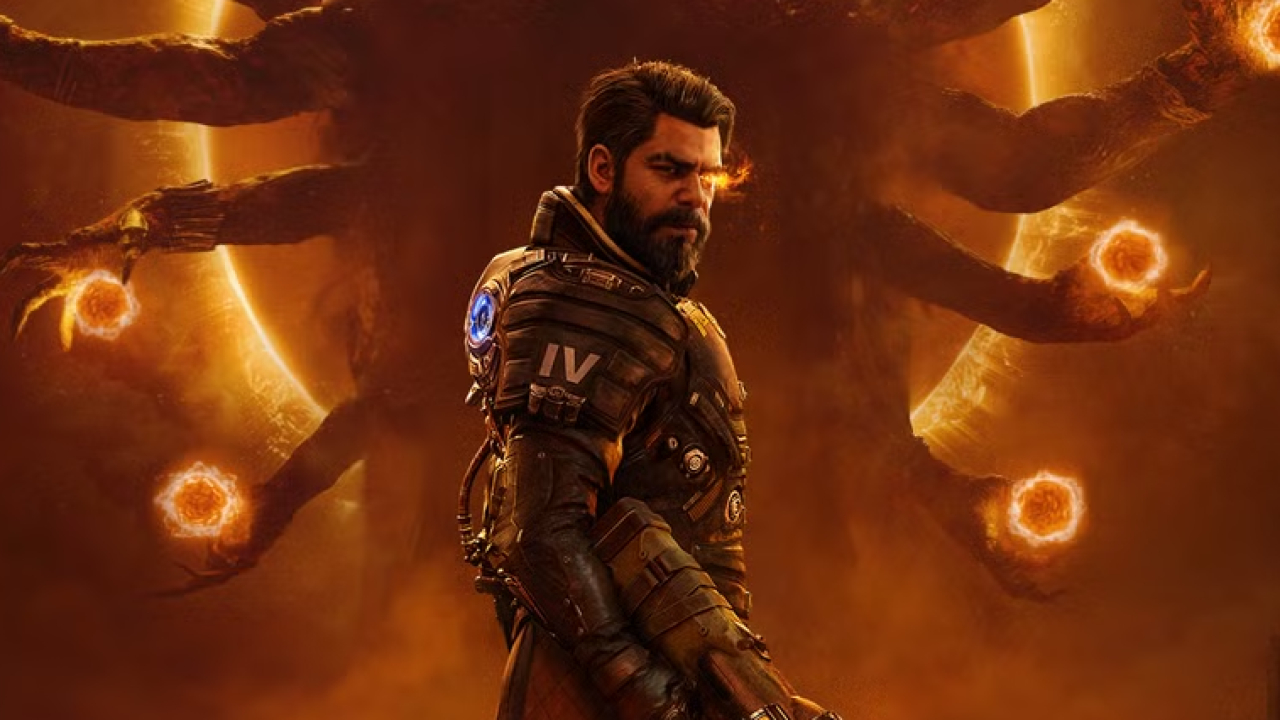
If you like self-flagellation and eye-candy is your thing, you’ll love Saros. Jokes aside, Saros is a very interesting game that skirts the line between being frustrating and glorious almost throughout its entire runtime, but what is it exactly?
Coming from the makers of 2021’s Returnal, Saros takes a pretty similar approach, and many would be forgiven for mistaking it as a direct sequel, despite being its own ‘thing’. It’s part third-person shooter, part bullet-hell, that requires you to fight through some pretty outrageous creatures and environments with old-school shooting mechanics and new-age roguelike elements. The shooting and dodging may be familiar to many, but for those who didn’t play Returnal, the die-and-try loop might catch many off guard.
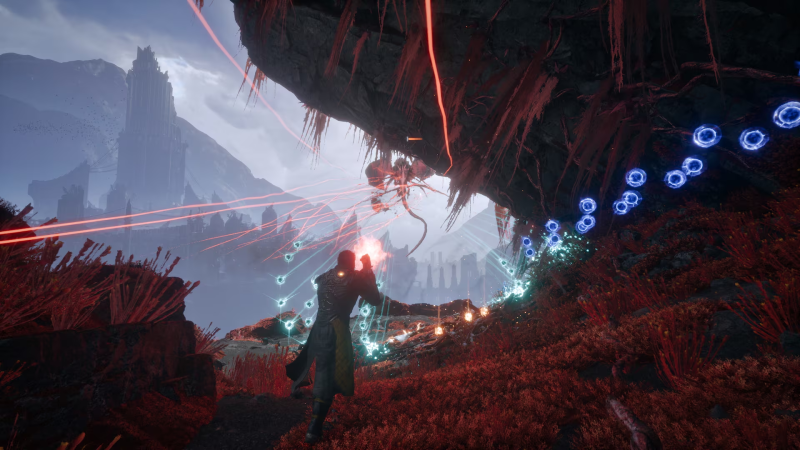
In terms of the moment-to-moment gameplay, it’s closer to something like the 2016 Doom reboot, taking on a variety of enemies in ‘closed’ arena segments before moving onto the next area. Thrown in with a bit of 2022’s Sifu, where you become more powerful each time you die, as you’re able to keep your spendable ability resources even after death. This is a huge help, as when you die and restart the level, you feel like you have a bit of a boost to help you take down what killed you last time.
Furthermore, you have a lot in your arsenal to give you a good shot each time. On top of assault rifles and powerful firearms (of which you can pick up better and better ones as you progress through a run), you have some powers bestowed upon you through Lumine – the planet’s resource, allowing you to shoot projectiles from your arm. Mixing up the gameplay is the inclusion of a shield, which you can activate temporarily. But, this is a bullet-hell game, so you can see where this is going…
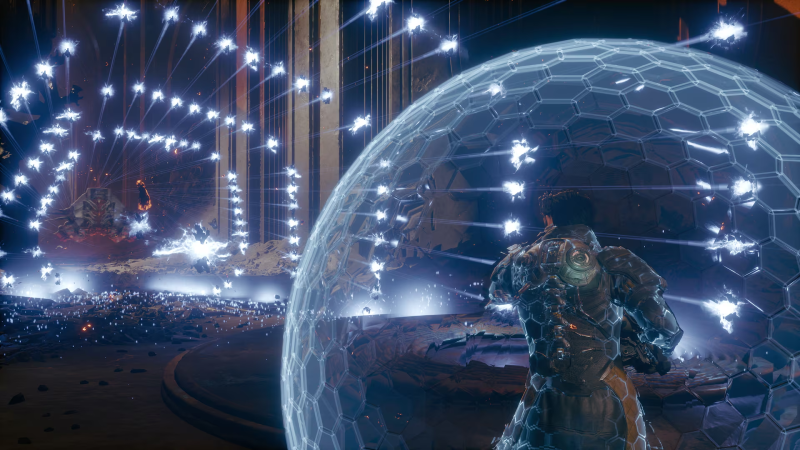
When fighting enemies that shoot all types of different coloured projectiles, you’ll have to dodge, dash through, and shield yourself against the correct projectile type (identified by colours). For example, the shield can handle certain types of shots, while others you’ll need to dash through, and some you’ll have to avoid altogether. This creates a ballet of sorts, where you’ll be dashing, shielding, jumping, shooting, and melee attacking your way through each encounter, looking something closer to Dance Dance Revolution than anything else.
Story-wise is where Saros is a mixed-bag. You play as Arjun, part of a team that is sent to the planet Carcosa to investigate the disappearance of the previous exploration team. Arjun soon learns that Carcosa not only houses some monstrous entities to deal with, but also a timeloop phenomenon associated with Carcosa’s eclipsing sun.
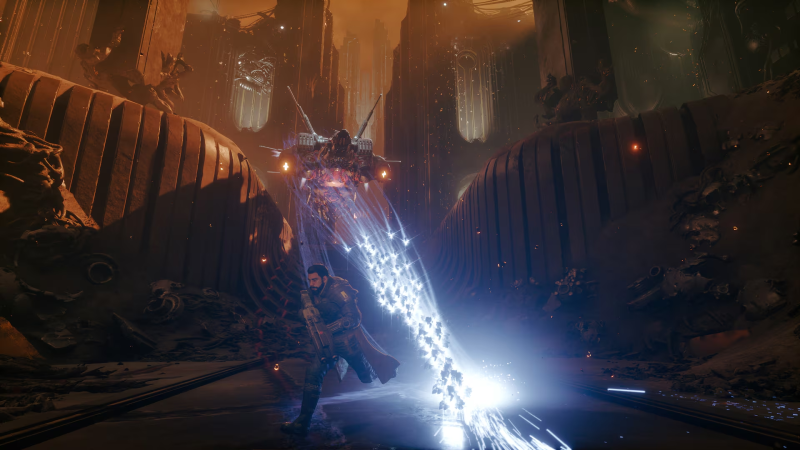
There is so much to enjoy with Saros in terms of its presentation. I loved the look, feel, score, and cosmic horror of Carcosa, along with the enemy and boss designs being some of the most unique I’ve seen in a while. However, while I think these things are the most intriguing part of the game, none of them are truly explained. Instead, you get a lot of obscure flashbacks and disconnected bits about Arjun’s wife, who was part of the original team that went missing and the main reason Arjun is searching for them.
While it is great to have some personal stakes in the story, the phenomenal and unexplainable things happening in front of you are somewhat ignored. Why does the planet undergo a terraforming eclipse so frequently? Who built the gargantuan alien structures and machines on the planet? Are the bosses sentient godlike entities or just mindless monsters? These things intrigued me, but were never fully answered.
How hard is Saros?
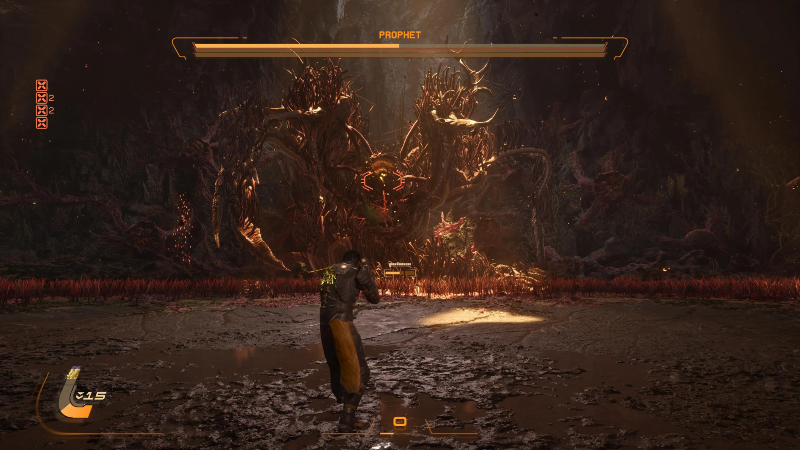
While it’s ‘easier’ than Returnal thanks to the permanent upgrades you get to keep after each death, you still have to, well, die for that to happen. On top of that, the story quite heavily relies on the fact that you need to die quite a few times, so there are points where it feels like the developers throw everything at you in order to achieve that outcome. Yes, you can beat these parts, but it’s extremely likely that most gamers will fall during these tougher encounters. So, if playing the same portions of levels a few times doesn’t bother you, then it’s great — just keep that in mind, it’s almost a necessity, not an option.
So, the time-loop element might not be everyone’s cup of tea, but a pro to this routine is that Saros makes good use of procedural generation, changing the layout and orientation of the level each time you play it. You’ll still recognise key parts, but shortcuts, traps, and additional environmental scenery will emerge after each death, which makes the run-throughs more interesting.
Should I play Saros?
Developer Housemarque have done a solid job making their Returnal-esque gameplay a lot more palatable with Saros. It’s a bit more forgiving, and you will finish it if you put in enough time and don’t mind a bit of repetition. It’s a clever system, however, I can’t help but feel like they’ve committed so hard to that timeloop/permadeath system that it ends up hampering what Saros could’ve been – both in terms of story and gameplay. If you loved Returnal, you’ll love Saros, but for newcomers and those apprehensive to these types of games, as you do with each and every run in Carcosa, I’d proceed with caution, as gorgeous-looking fun can turn to frustration pretty quickly.