Game reviews
I ALMOST Quit ‘Death Stranding 2’, Now I Love It [Review]
Is more Death Stranding a good thing? We review Hideo Kojima’s highly-buzzed-about sequel.

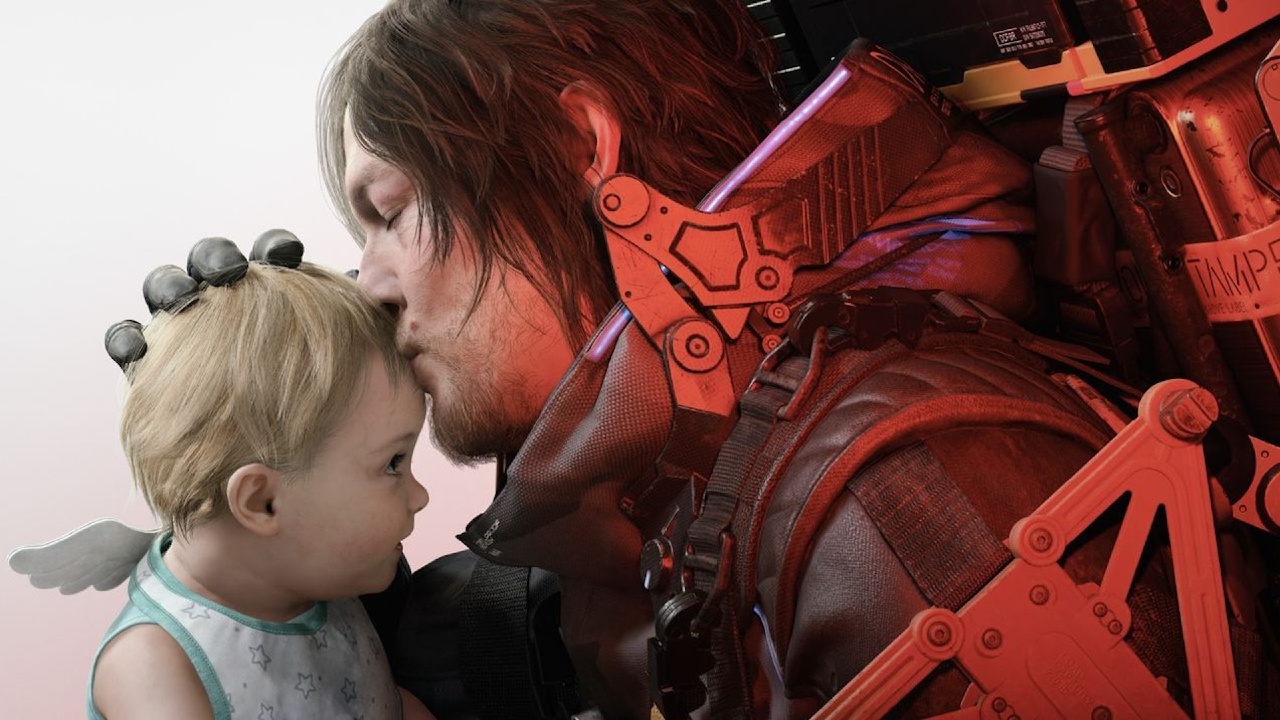
I’ll be honest, with the first Death Stranding game, I struggled to ‘get’ it. I thought it was an interesting yet unrefined experience that had more head-scratching than moments of awe. After playing through Death Stranding 2, the first game now feels like the prototype, with the sequel now fully realising what Metal Gear Solid creator Hideo Kojima has been striving to achieve.
While it was hard to describe and explain the genre of DS1, Death Stranding 2 is a lot more confident at what it is, even if it is a bit of a Frankenstein monster, so to speak. Part survival game, part stealth-action, and part hiking-simulation — DS2 is a fascinating blend of genres that delivers a bit ‘more’ with regards to how all these elements fit together.
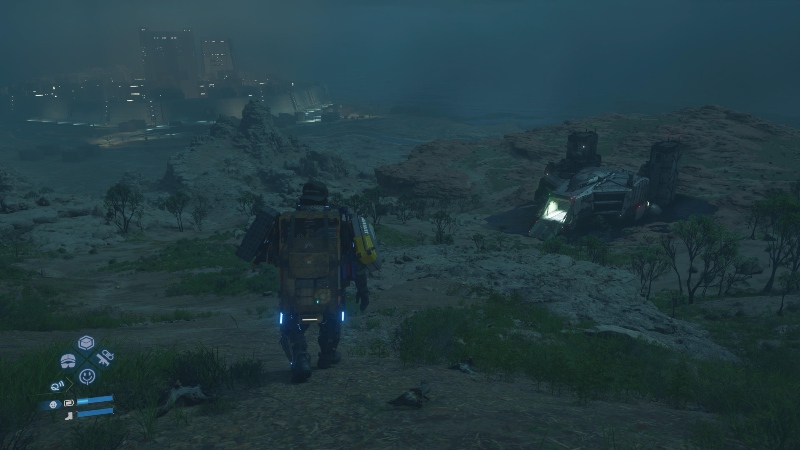
Explaining it in the worst (but possibly most understandable) way possible, Death Stranding is all about an event that wiped out most of humanity, leaving a post-apocalyptic wasteland. To reconnect the world, human couriers have been dispatched to link outposts to a futuristic internet (the Chiral Network), enabling humanity to communicate, cooperate, and essentially reboot itself. The tricky bit is that the Death Stranding event caused gooey creatures and dead spirits to roam Earth, which you’ll have to avoid or dispatch during your journey.
On top of that, there’s a whole bunch of bonkers, wacky Kojima-esque characters and sub-plots, but the gist is pretty much to make your way across difficult terrain, fight humans and supernatural entities, and sync up to other bases. There’s a whole personal story of protagonist Sam Bridges (played by Norman Reedus) that deals with loss and grief, and it all fits together with the overarching mission excellently.
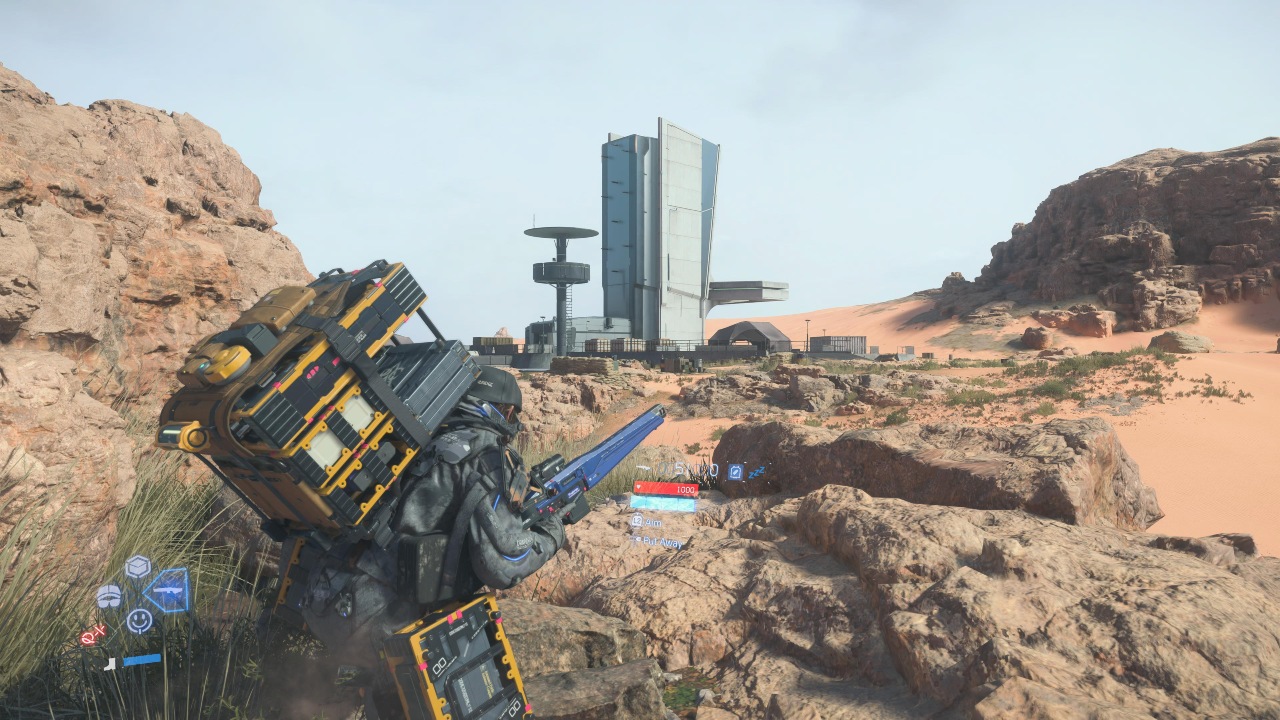
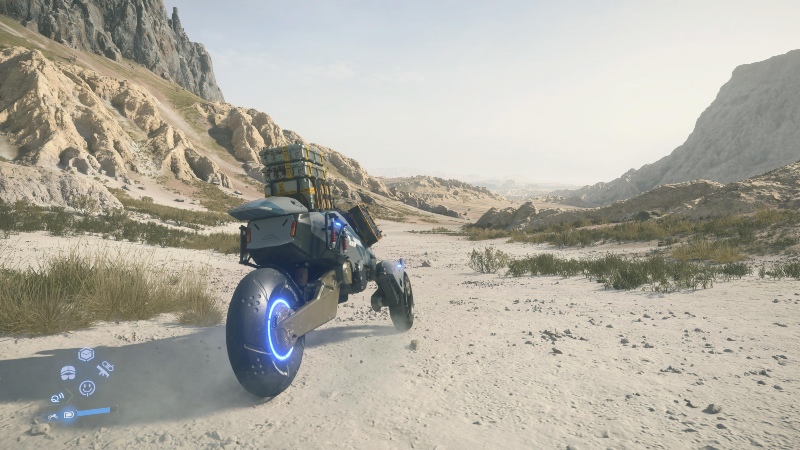
The actual traversal was a pain point in Death Stranding 1, and intentionally so. It’s supposed to be hard to get across rocks and harsh environments. Managing the weight of the items you’re carrying, how it affects your balance and speed, and trying to avoid material-decaying rain (called Timefall) are all still part of the routine, although Death Stranding 2 does provide a little more help in the form of early-game vehicles and structures.
Timefall shelters can be built using a fabrication tool, watch towers can help you get an elevated look at the terrain or enemy base ahead of you, and vehicles can be recharged at charging posts. All these little things, while taking the headache out of some of the long-range trips, just make Death Stranding 2 a much more accessible experience.
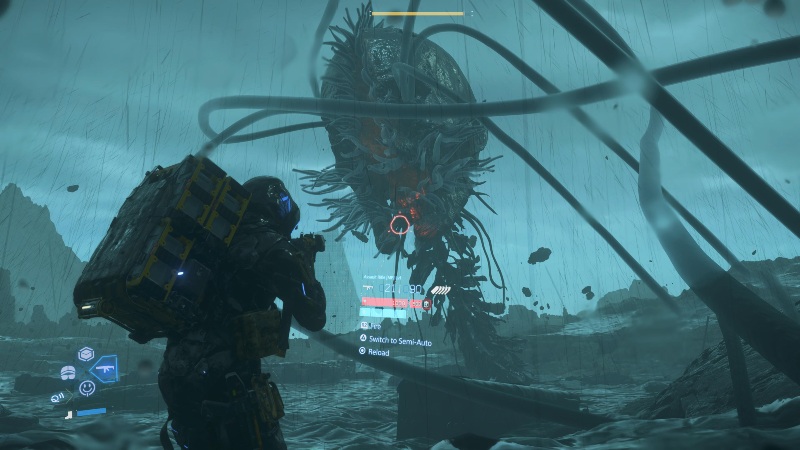
The streamlined approach to traversal has also been applied to combat. You have a lot more guns and options this time around, and most weapons have been outfitted with special ammo or technology to use against BTs (the ghost-like entities). The volume of encounters has gone up too, so you have a lot more action on your way across the open-world, including some sizable boss encounters.
Of course, part of the enjoyment of Death Stranding 2 is simply slowing down and enjoying the macabre melancholy of the journey, rather than the destination. And the fact that the game and world are absolutely stunning helps with this. The visuals running on Guerrilla Games’ Decima engine (used for Horizon: Forbidden West) really are top-notch; and throw in a gorgeous score and a great soundtrack, and you really get a visual and audio feast when trudging through each mission.
Ultimately, Death Stranding 2 is still quite an obscure game, but there are a lot more accessible elements to the game that make it more appealing to a wider audience. So, if you’re looking for a bizarre but intriguing sci-fi story, a lot of gameplay variety, and an experience that doesn’t hold your hand, Death Stranding 2 is well worth playing, even if you didn’t enjoy the first.
Death Stranding 2 is available on PS5.