
Featured
SA schools, clubs get new scrum laws
SARU outlines the new laws to be implemented within school and club rugby

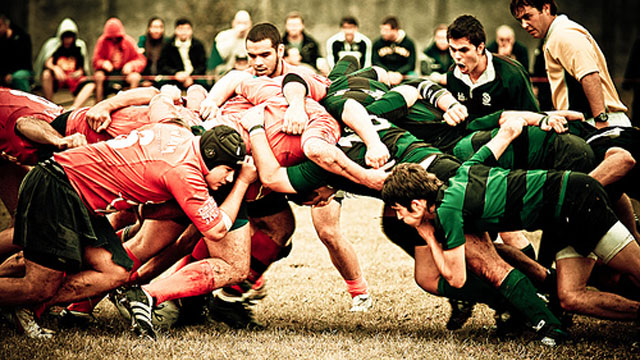
The South African Rugby Union (SARU) has introduced a number of new scrum laws the further ensure safety and proficiency in school and club-level rugby.
“We identified the engagement sequence as an area that could be improved in our amateur game, mainly the hit when the two packs come together, as well as when scrums collapse,” said Jurie Roux, CEO of SARU.
The new rules have been developed by research and rugby experts, such as former French prop and current Springbok scrum consultant Pieter de Villiers, former Springbok World Cup winning prop Balie Swart, SA U20 coach and former Springbok prop Dawie Theron and SARU General Manager: High Performance Rassie Erasmus.
From now on, scrum engagements at amateur level will be divided into three categories:
First category (Under-9 and younger): The scrum engagement will be passive engagement with no contest.
Second category (U11s to U16s, including provincial school age-group rugby): Engagement will also be passive, meaning there is no hit, but full scrum contest will be allowed until the scrum has moved 1.5 metres.
Third category (U18, including provincial school age-group rugby, to the second highest tier club rugby): Props will pre-bind with a reduced hit on engagement. At schools level, the 1.5m rule applies, but above that, the scrum will be fully contestable.
At these levels, teams feeding the scrum will not concede possession if the scrum passes through 45 degrees (schools) or 90 degrees (adults). In this instance, the scrum will be reset, unless the wheel was intentional, where the referee will penalise the offending team. Binding post-engagement between the two front rows has to be such that the elbows are not lower than the shoulder line.
The engagement call for these three categories will be “crouch, bind, scrum” and the distance between the packs pre-setting will be reduced to where the heads of the two front rows are aligned ear-to-ear and in the opposite channel.
The regular “crouch, touch, set” sequence and IRB scrum laws will apply in all other rugby from the level of super league club rugby (the highest tier of club rugby in each province) and up, including provincial adult representative age-group rugby (U19 and U21) and all professional rugby.
“The emphasis will revert back to scrumming after the ball is fed in as opposed to ‘hitting’ in on the opponent,” said Andre Watson, SARU General Manager.
The laws are being implemented to counter the head and neck injuries in rugby, in which 37% are caused through scrums.








Joe B
February 14, 2013 at 06:22
This is crap. Just becoming lie Rugby League. Are we going to ban the Tackle next, because this causes the most injuries in a game of Rugby, not scrums. Stop reducing the physical impact of the game we love.
Jeremy Proome
February 14, 2013 at 08:29
It is a sad step for the game to pull back on some of the physicality, but I guess safety comes first, and seeing head injuries first hand is a frightening thing. I guess the worry is that schoolboy rugby is also evolving and (for the most part) isn’t the “amateur” game it used to be. Schoolboys that are +100kgs can cause some damage, so guess precautions need to be put in place.